
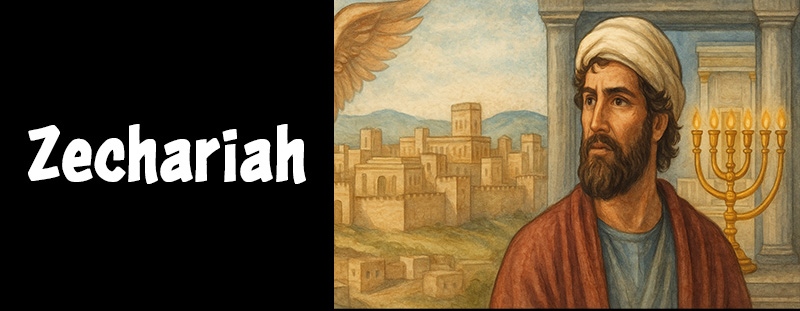
✨ Not by Might, Nor by Power, but by My Spirit ✨
“Then he answered and spake unto me, saying, This is the word of the LORD unto Zerubbabel, saying, Not by might, nor by power, but by my spirit, saith the LORD of hosts.” – Zechariah 4:6 (KJV)
Zechariah 4 delivers one of the most powerful prophetic declarations in all of Scripture. The prophet receives a vision meant to strengthen and instruct Israel during the rebuilding of the temple after the Babylonian exile. The people had returned to Jerusalem, but discouragement, opposition, and limited resources weighed heavily on them. Into that atmosphere of weakness and uncertainty, God speaks with clarity and authority.
This chapter centers on a golden candlestick (lampstand) supplied continually by two olive trees. The imagery is rich with symbolism. The lampstand represents the restored witness of Israel. The oil represents the Spirit of God. The olive trees signify God’s anointed servants—specifically Zerubbabel the governor and Joshua the high priest—through whom the Lord would accomplish His purposes.
The message is unmistakable: divine work is not accomplished by human strength, political influence, or military force. It advances by the Spirit of God alone. The rebuilding of the temple would not fail because the Lord Himself guaranteed its completion. What appeared small in human eyes carried eternal weight in heaven.
Zechariah 4 therefore stands as both encouragement and correction. It rebukes reliance on fleshly strength. It encourages perseverance in God-ordained assignments. It reminds believers in every generation that when God calls, He supplies. When He promises, He fulfills. And when He begins a work, He completes it.
📜 Structure of Zechariah Chapter 4
Verses 1–3: The Vision of the Golden Candlestick
Zechariah is awakened by the angel and shown a golden candlestick with a bowl on top and seven lamps fed by seven pipes. Beside it stand two olive trees. The imagery immediately signals divine provision. Unlike the tabernacle lampstand that required continual priestly maintenance, this one is supplied automatically by living trees. The message is clear: God Himself sustains His light. The restoration of Israel will not depend on human effort alone but on a supernatural, uninterrupted flow of divine power.
Verses 4–7: Not by Might, Nor by Power
When Zechariah asks for understanding, the angel responds with the central declaration of the chapter. “Not by might, nor by power, but by my spirit.” The obstacle before Zerubbabel is described as a “great mountain.” Symbolically, it represents political resistance, discouragement, and material shortage. Yet God declares the mountain will become a plain. The temple foundation laid by Zerubbabel will be completed, and he will bring forth the headstone with shouts of “Grace, grace unto it.” The success of the work will testify to divine enablement, not human brilliance.
Verses 8–10: The Assurance of Completion
The word of the Lord confirms that Zerubbabel both laid the foundation and will finish the temple. This promise counters doubt and opposition. The Lord rebukes those who despise “the day of small things.” Though the rebuilding appears modest compared to Solomon’s temple, heaven rejoices in faithful obedience. The seven eyes of the LORD symbolize His omniscient oversight. Nothing escapes His view. He watches the work, and therefore the work will stand.
Verses 11–14: The Two Olive Trees Explained
Zechariah again inquires about the olive trees and branches that supply oil directly into the bowl. The angel explains they are “the two anointed ones, that stand by the Lord of the whole earth.” Historically, this refers to Zerubbabel (civil leadership) and Joshua (spiritual leadership). Together they represent God’s ordained structure for restoration—governance and priesthood operating under divine anointing. The oil flows not from human manufacture but from divine appointment.
💡 Key Themes
✨ Dependence on the Spirit
God’s work advances through spiritual empowerment. Human talent, though useful, is insufficient without the Spirit’s anointing.
✨ Perseverance in Small Beginnings
God values faithfulness over spectacle. What begins small under obedience carries eternal significance.
✨ Divine Oversight and Completion
When God initiates a work, He ensures its fulfillment. His watchful eye guarantees the outcome.
👤 Key People
- Zerubbabel – Governor of Judah, responsible for rebuilding the temple foundation and its completion.
- Joshua (Jeshua) – The high priest representing spiritual restoration.
- Zechariah – The prophet receiving and communicating the vision.
- The Angel of the LORD – The divine messenger interpreting the revelation.
🔥 Why This Chapter Matters
Zechariah 4 speaks directly to seasons of discouragement. It addresses leaders overwhelmed by responsibility. It strengthens believers facing resistance. The principle remains timeless: spiritual victories are secured by spiritual power.
This chapter also anticipates broader prophetic fulfillment. The imagery of lampstands and olive trees reappears in Revelation, reinforcing the theme of Spirit-empowered witness. Ultimately, the message transcends temple construction. It speaks to kingdom work in every generation. When obstacles resemble mountains, God levels them. When resources seem scarce, He supplies oil. When progress feels slow, He reminds us not to despise small beginnings.
💭 Let’s Reflect
- Are you relying on personal strength where God is calling for spiritual dependence?
- What “mountain” in your life needs to become a plain through faith?
- Have you underestimated the value of small, faithful obedience?
❓ Ready to Go Deeper?
👉 Zechariah Chapter 5 – The flying roll and the woman in the ephah