
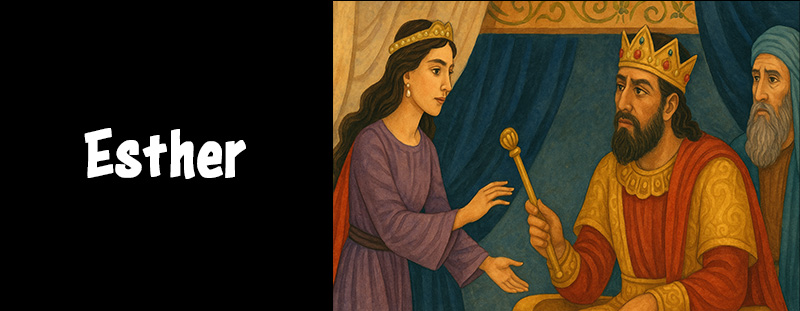
👑 The Sovereign Setup Behind a Royal Crisis 👑
“But the queen Vashti refused to come at the king’s commandment by his chamberlains: therefore was the king very wroth, and his anger burned in him.”
— Esther 1:12 (KJV)
Esther Chapter 1 opens the book with grandeur, excess, and political power, yet beneath the surface, God is already positioning history for His redemptive purposes. Though His name is not mentioned once in the book of Esther, His sovereignty saturates every event. This chapter introduces King Ahasuerus (Xerxes I), ruler of the vast Persian Empire, stretching from India to Ethiopia. His reign is marked by opulence, authority, and unchecked pride.
The chapter centers on a six-month royal feast followed by a seven-day banquet for the people of Shushan. These celebrations were not merely social events; they were strategic displays of imperial dominance. Ahasuerus sought to reinforce loyalty and showcase his glory. However, when intoxication fuels ego, wisdom collapses. The king commands Queen Vashti to present herself before the drunken assembly, a request that compromises dignity and honor.
Vashti’s refusal becomes the catalytic moment of the book. Her decision disrupts royal expectations and exposes the fragility of male-dominated power structures. The king’s advisers, fearing social upheaval, manipulate the situation to protect patriarchy rather than justice. Their counsel results in Vashti’s removal as queen, creating a vacancy that will later be filled by Esther—though no one yet sees it.
This chapter teaches a critical biblical truth: God often works through human arrogance, flawed systems, and unjust decisions to accomplish divine outcomes. What appears to be political chaos is actually providential choreography. Proverbs 21:1 (KJV) confirms this reality: “The king’s heart is in the hand of the LORD, as the rivers of water: he turneth it whithersoever he will.”
Esther 1 lays the foundation for deliverance before danger is even revealed. God prepares solutions long before crises arise. 🛡️
📜 Structure of Esther Chapter 1
Verses 1–4: The Scope of Ahasuerus’ Power
These verses establish the magnitude of Ahasuerus’ kingdom and the political motivation behind the prolonged feast. The display of wealth and authority was designed to unify military leaders and nobles under imperial dominance. However, Scripture subtly critiques the excess. Power flaunted without humility invites instability. The king appears sovereign, yet he is already acting under unseen divine direction.
Verses 5–9: The Seven-Day Feast and Moral Contrast
The second feast opens to all people in Shushan, emphasizing indulgence without restraint. In contrast, Queen Vashti hosts a separate banquet for women. This distinction highlights order, modesty, and decorum—qualities absent from the king’s court. Scripture presents Vashti as dignified, while the king’s environment spirals into moral erosion.
Verses 10–12: Vashti’s Refusal
Under the influence of wine, Ahasuerus commands Vashti to display herself publicly. Vashti refuses. Her decision is not rebellion but self-respect. Though Scripture does not moralize her action explicitly, the narrative framing suggests wisdom. Her refusal triggers outrage, revealing how fragile unchecked authority truly is.
Verses 13–20: Fear-Driven Counsel
The advisers respond not with justice but fear. They exaggerate Vashti’s refusal into a national threat, fearing women might follow her example. Their counsel exposes how power systems protect themselves through control rather than righteousness. This political overreaction sets God’s plan into motion.
Verses 21–22: A Kingdom Decree
The decree removes Vashti and enforces male dominance across the empire. Ironically, this attempt to secure authority creates the exact conditions necessary for Esther’s rise. Human fear produces divine opportunity.
💡 Key Themes
✨ God’s Sovereignty Without Attribution
Though God is unnamed, His control is unmistakable. He orchestrates events silently, proving that divine authority does not require public acknowledgment to be absolute.
✨ Pride Precedes Collapse
Ahasuerus’ downfall begins with indulgence and ego. Scripture consistently warns that pride destabilizes leadership and invites judgment.
✨ Preparation Before Peril
God prepares deliverers long before deliverance is needed. Esther’s path begins before Israel’s threat is revealed.
👤 Key People
- King Ahasuerus – A powerful yet impulsive ruler shaped by pride.
- Queen Vashti – A dignified woman whose refusal alters history.
- The Royal Advisers – Fear-driven counselors preserving power over justice.
🔥 Why This Chapter Matters
Esther Chapter 1 proves that God governs history even when righteousness is absent from leadership. Human pride, injustice, and fear cannot derail divine purposes. This chapter reminds believers that God is always working behind the scenes, positioning His people for future deliverance. “For such a time as this” begins long before the time arrives.
💭 Let’s Reflect
- Where might God be working silently in your life right now?
- How do pride and fear distort decision-making today?
- Are you trusting God’s unseen preparation?
❓Ready to Go Deeper?
👉 Start reading Esther Chapter 2 – Esther chosen as queen