
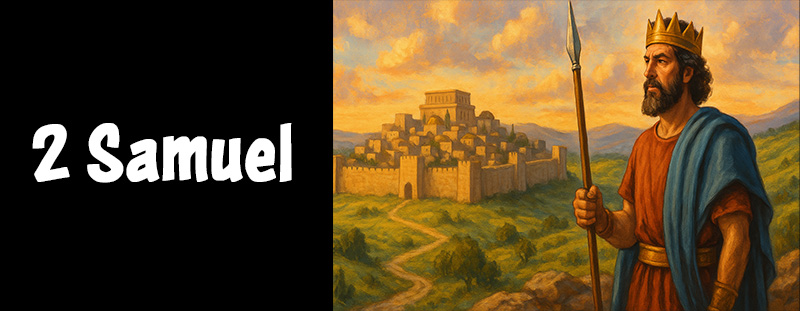
👑 Restoration, Mercy, and a Divided Kingdom 👑
“And the king arose, and sat in the gate. And they told unto all the people, saying, Behold, the king doth sit in the gate. And all the people came before the king: for Israel had fled every man to his tent.” – 2 Samuel 19:8
2 Samuel 19 records the aftermath of Absalom’s death and David’s return to Jerusalem. Although the rebellion has ended, the kingdom remains fragile, and David must navigate grief, leadership, and reconciliation. This chapter highlights the complexity of restoration—both politically and personally—as David works to reunite a divided nation.
David begins in deep mourning for Absalom, but Joab rebukes him, reminding him that his excessive grief is discouraging the very people who fought to restore him. David responds wisely, regaining his role as king and reestablishing leadership. This moment shows the importance of balancing personal emotions with responsibility, especially in leadership.
As David returns, he encounters individuals who had either opposed or supported him. His responses—marked by mercy, restraint, and discernment—demonstrate godly leadership. Rather than seeking revenge, David chooses forgiveness and unity, though underlying tensions between Judah and Israel begin to surface again.
📜 Structure of 2 Samuel Chapter 19
Verses 1–8: Joab Rebukes David
David’s mourning for Absalom overwhelms the victory of his people. Joab confronts him directly, warning that his behavior dishonors those who fought for him. David listens and takes action, sitting in the gate to encourage and receive the people, restoring morale and leadership.
Verses 9–15: The Return of the King
The tribes of Israel debate bringing David back as king. Judah ultimately takes the lead, inviting David to return. This shows both the desire for unity and the lingering division among the tribes, revealing the delicate nature of national restoration.
Verses 16–23: Mercy Toward Shimei
Shimei, who previously cursed David, comes seeking forgiveness. Despite Abishai’s call for judgment, David spares him, showing mercy and recognizing that this is a time for restoration, not revenge.
Verses 24–30: Mephibosheth’s Explanation
Mephibosheth explains that he was misrepresented by Ziba and had remained loyal to David. David responds by dividing the land between them, showing both mercy and a cautious approach to justice, though not fully resolving the matter.
Verses 31–40: Honor for Barzillai
Barzillai, who supported David during his exile, is honored by the king. Though he declines to go to Jerusalem due to his age, David extends kindness to his household. This moment highlights gratitude and honoring those who remain faithful.
Verses 41–43: Division Among the Tribes
A dispute arises between Judah and the other tribes over David’s return, revealing underlying tensions. While the king is restored, unity is not fully achieved, setting the stage for future conflict.
💡 Key Themes
✨ Restoration Requires Wisdom
David demonstrates that restoring leadership involves balancing justice, mercy, and unity.
✨ Mercy Over Revenge
David chooses forgiveness toward Shimei and others, modeling grace in leadership.
✨ The Fragility of Unity
Even after victory, divisions remain, reminding us that healing takes time and careful guidance.
👤 Key People
- David – Restored king, navigating grief, leadership, and reconciliation.
- Joab – Commander who challenges David to act with strength and responsibility.
- Shimei – Former enemy who seeks forgiveness and receives mercy.
- Mephibosheth – Loyal to David, clarifying misunderstandings about his actions.
- Barzillai – Faithful supporter, honored for his loyalty.
🔥 Why This Chapter Matters
2 Samuel 19 teaches that restoration after conflict requires humility, wisdom, and grace. David’s actions show how leaders must rise above personal emotions to serve others and unify people. The chapter also reminds us that forgiveness is powerful, but unity must be carefully nurtured to prevent future division.
💭 Let’s Reflect
- How do you balance personal emotions with responsibilities in leadership or family life?
- What can you learn from David’s choice to show mercy instead of seeking revenge?
- How can you contribute to unity and restoration in relationships around you?
❓ Ready to Go Deeper?
👉 Start reading 2 Samuel chapter 20 – Sheba’s rebellion
Or, if you’d like to jump to a specific chapter in 2 Samuel, simply click the chapter number below:
1 | 2 | 3 | 4 | 5 | 6 | 7 | 8 | 9 | 10 | 11 | 12 | 13 | 14 | 15 | 16 | 17 | 18 | 19 | 20 | 21 | 22 | 23 | 24