
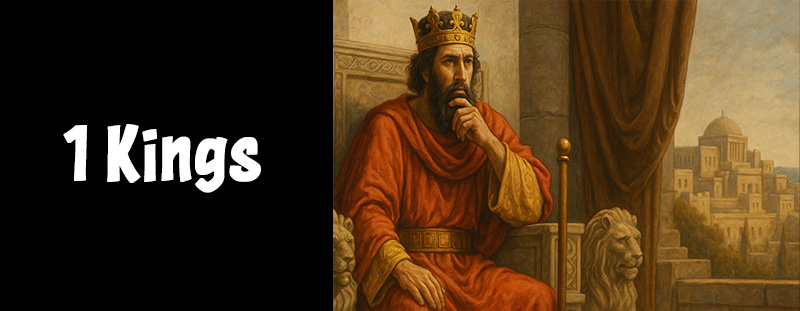
🏛️ Building God’s Dwelling: Precision, Obedience, and Divine Purpose 🏛️
“And it came to pass in the four hundred and eightieth year after the children of Israel were come out of the land of Egypt, in the fourth year of Solomon’s reign over Israel, that he began to build the house of the Lord.” – 1 Kings 6:1
1 Kings Chapter 6 marks the beginning of Solomon’s temple construction, a pivotal moment in Israel’s spiritual and national history. The chapter emphasizes obedience, meticulous planning, and God’s purpose. Solomon’s temple is not only a physical structure but a sacred space where God’s presence will dwell among His people. Every detail reflects divine instruction, demonstrating that sacred work requires reverent precision.
The chapter also illustrates that God’s purposes often unfold according to His timetable. The temple is built in the fourth year of Solomon’s reign, forty-eight decades after Israel’s exodus. This timeline underscores patience, preparation, and fulfillment of God’s promises.
📜 Structure of 1 Kings Chapter 6
Verses 1–10: Planning and Foundation
Solomon begins building the temple according to specifications given by God. The structure is precisely measured: the house is sixty cubits long, twenty wide, and thirty high. It includes the porch, inner sanctuary, and side chambers.
The detailed planning highlights the sacredness of the work. Every element—from cedar walls to gold overlays—is executed with reverence and skill. Solomon spares no effort, demonstrating obedience and diligence in honoring God.
Verses 11–13: God’s Assurance
The Lord speaks to Solomon, reminding him that He will dwell among the children of Israel if they walk in His statutes. God’s promise is conditional upon obedience, reinforcing that the temple is not merely a human project but a sacred covenantal space.
This divine assurance encourages Solomon and the people, linking the temple’s construction with spiritual fidelity and covenantal continuity.
Verses 14–22: Temple Interior and Holy of Holies
The interior of the temple is crafted with intricate detail. Cedar walls, gold overlays, and artistic carvings cover the sanctuary. The most sacred space—the Holy of Holies—houses the ark of the covenant.
Solomon follows the pattern prescribed to Moses for the tabernacle, showing continuity between the wilderness worship and the permanent dwelling place. The precision demonstrates both skill and devotion, reflecting the sacred nature of God’s house.
Verses 23–28: Cherubim and Sacred Decoration
Two cherubim of olive wood, each ten cubits high, are placed in the Holy of Holies. Their wings stretch across the width of the room, symbolizing God’s protective presence. The walls and ceilings are overlaid with gold, and intricate designs adorn the space.
The sacred decorations remind Israel that God is holy, majestic, and worthy of honor. The temple is a tangible expression of reverence and worship.
Verses 29–38: Dedication of Craft and Labor
The chapter concludes by noting that the entire temple construction is performed with skilled craftsmen, artisans, and laborers. Solomon ensures that the work is precise, honoring God’s instructions.
This chapter highlights the balance of divine guidance, human skill, and faithful labor—key principles for accomplishing God’s purposes.
💡 Key Themes
✨ Obedience and Detail in Sacred Work
Solomon follows God’s instructions meticulously, demonstrating that reverence for God is shown in both vision and execution.
✨ God’s Presence Dwells with the Faithful
The temple is designed as a place where God will dwell among His people, emphasizing the importance of covenantal faithfulness.
✨ Alignment with God’s Timing
The temple is built according to divine timing, reinforcing patience and trust in God’s plan.
👤 Key People
- Solomon – The king overseeing construction with obedience, wisdom, and dedication.
- God – The divine architect, guiding design, blessing labor, and promising presence.
- Skilled Craftsmen – Artisans and laborers who execute the sacred work with precision and devotion.
🔥 Why This Chapter Matters
1 Kings Chapter 6 demonstrates that sacred projects require meticulous planning, obedience, and reverence for God. The temple is a lasting symbol of God’s presence among His people. Solomon’s example shows that leadership involves aligning vision with God’s will and executing it with diligence.
“Where no counsel is, the people fall: but in the multitude of counsellors there is safety.” – Proverbs 11:14 (KJV)
💭 Let’s Reflect
- How can attention to detail in your work reflect obedience and reverence to God?
- Are you aligning your projects and decisions with God’s guidance and timing?
- In what ways can skill, diligence, and faithfulness combine to honor God in your daily life?
❓ Ready to Go Deeper?
👉 Start reading 1 Kings Chapter 7 – Solomon builds the palace and temple furnishings
Or, if you’d like to jump to a specific chapter in 1 Kings, simply click the chapter number below:
1 | 2 | 3 | 4 | 5 | 6 | 7 | 8 | 9 | 10 | 11 | 12 | 13 | 14 | 15 | 16 | 17 | 18 | 19 | 20 | 21 | 22