
🍖 Reverence, Obedience, and Sacred Fellowship 🍖
“For it is the blood that maketh an atonement for the soul.” – Leviticus 7:11
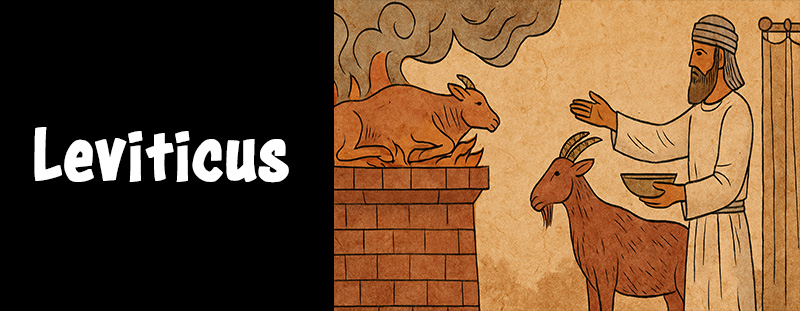
Leviticus 7 concludes the detailed instructions concerning the various offerings, bringing clarity to the guilt offering, peace offering, and priestly portions. This chapter emphasizes that worship is not random or casual—it is ordered, sacred, and governed by God’s commands. Through these laws, God teaches His people reverence, discipline, and the importance of honoring Him in every aspect of worship.
A major focus in this chapter is the proper handling of sacrifices, especially regarding what may be eaten and what must be burned. The peace offering, in particular, highlights thanksgiving and voluntary worship, showing that gratitude toward God should be expressed intentionally. Whether the offering is given as thanksgiving, a vow, or a freewill act, it reflects a heart that recognizes God’s goodness.
God also establishes clear boundaries regarding cleanliness and holiness. Anyone who is unclean is forbidden from partaking in the offerings, reinforcing that fellowship with God requires purity. Additionally, strict commands are given not to consume blood or certain fats, emphasizing that life belongs to God, and His instructions must be respected.
Leviticus 7 ultimately shows that worship involves both privilege and responsibility. While God invites His people into fellowship, He also requires obedience and reverence. These offerings point forward to Christ, whose sacrifice fulfills all requirements and brings believers into true and lasting communion with God.
📜 Structure of Leviticus Chapter 7
Verses 1–10: The Guilt Offering Instructions
These verses provide further detail on the guilt offering. The sacrifice is considered most holy, and specific portions are given to the priests. This reinforces the importance of honoring God’s system of worship and ensuring that those who serve Him are provided for.
Verses 11–21: The Peace Offering and Thanksgiving
The peace offering is explained in greater depth, including offerings of thanksgiving, vows, and freewill gifts. Instructions are given on how and when the meat must be eaten. This teaches that worship must be intentional, timely, and carried out according to God’s will.
Verses 22–27: Prohibition of Fat and Blood
God commands that His people must not eat fat or blood, as these are set apart for sacred purposes. The blood represents life, and the fat belongs to the Lord. This underscores the principle that certain things are holy and must be treated with reverence.
Verses 28–38: Priestly Portions and Final Instructions
Specific portions of the offerings are designated for the priests, including the breast and shoulder. These provisions ensure that those who minister before the Lord are supported. The chapter concludes by summarizing the laws of the offerings, confirming that these instructions were given directly by God through Moses.
💡 Key Themes
✨ Reverence in Worship
God requires worship to be conducted with respect, order, and obedience to His commands.
✨ Gratitude and Fellowship
Peace offerings highlight thankfulness and shared fellowship with God and others.
✨ Holiness and Boundaries
Restrictions on blood and fat emphasize that God’s standards must be honored, and holiness must be maintained.
👤 Key People
- Moses – Delivers God’s laws to the people.
- The Priests – Receive portions of the offerings and carry out sacred duties.
- The Offerer – Brings sacrifices in obedience, gratitude, and worship.
🔥 Why This Chapter Matters
Leviticus 7 teaches that worship is both a privilege and a responsibility. God invites His people into fellowship, yet He sets clear boundaries to maintain holiness and reverence. This chapter reminds us that gratitude must be expressed intentionally, and obedience is essential in our relationship with God. Through Christ, we now experience the fulfillment of these offerings and the blessing of true communion with Him.
💭 Let’s Reflect
- Do you approach worship with reverence and intentionality, or casually?
- How do you express gratitude for God’s blessings in your life?
- Are you respecting the boundaries God has set for holiness and obedience?
❓ Ready to Go Deeper?
👉 Start reading Leviticus chapter 8 – Consecration of Aaron and his sons
Or, if you’d like to jump to a specific chapter in Leviticus, simply click the chapter number below:
1 | 2 | 3 | 4 | 5 | 6 | 7 | 8 | 9 | 10 | 11 | 12 | 13 | 14 | 15 | 16 | 17 | 18 | 19 | 20 | 21 | 22 | 23 | 24 | 25 | 26 | 27