
⚖️ Atonement for Unintentional Sin ⚖️
“And the LORD spake unto Moses, saying, Speak unto the children of Israel, saying, If a soul shall sin through ignorance against any of the commandments of the LORD concerning things which ought not to be done, and shall do against any of them:” – Leviticus 4:1-2
Leviticus 4 introduces the sin offering, addressing unintentional sins committed by individuals or the community. Unlike the burnt or peace offerings, this sacrifice provides atonement and reconciliation for mistakes made unknowingly. God’s instructions show that holiness and obedience are required, but His grace allows for forgiveness when errors occur without malicious intent.
This chapter demonstrates the seriousness of sin, even when committed inadvertently. By requiring a prescribed sacrifice—whether a bull, goat, or lamb—God teaches His people that sin cannot be ignored and must be addressed with repentance and obedience. The offering points to Christ, the ultimate Sin Offering, who bore the consequences of human sin once and for all (Hebrews 9:26-28).
Leviticus 4 also highlights the role of the priests in mediating between God and His people. The priest performs rituals such as sprinkling blood and burning parts of the sacrifice, emphasizing that atonement is both divine and procedural, meant to teach reverence, accountability, and God’s mercy.
📜 Structure of Leviticus Chapter 4
Verses 1–12: Sin Offering for the High Priest
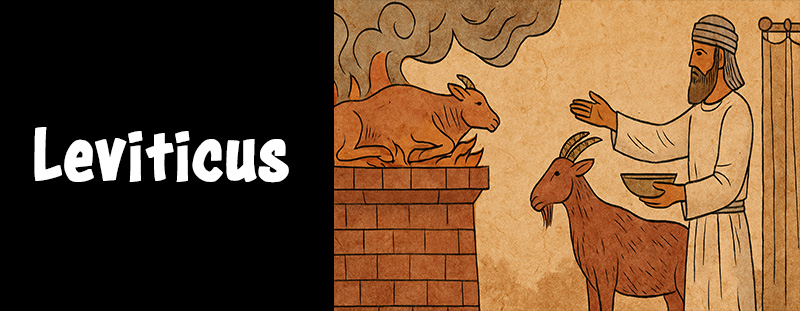
When the high priest sins unintentionally, he brings a young bull as a sin offering. The priest sprinkles blood before the Lord and burns the fat on the altar. This sacrifice ensures atonement for the entire priesthood and teaches the importance of holiness in leadership.
Verses 13–21: Sin Offering for the Whole Congregation
If the entire community sins unknowingly, a young bull is offered similarly. The blood is applied at the altar to make atonement for the people, showing that sin affects not just the individual but the wider community. God’s provision for collective sin underscores His mercy and justice.
Verses 22–35: Sin Offering for Leaders and Individuals
Leaders or ordinary individuals may offer a goat or lamb depending on their position and means. The procedure includes sprinkling blood and burning specific parts, symbolizing purification and forgiveness. Even the humblest Israelite could receive reconciliation with God through obedience and proper offering.
💡 Key Themes
✨ Accountability in Sin
Unintentional sin is taken seriously, teaching that all sin requires attention and repentance.
✨ God’s Mercy and Provision
The sin offering shows God’s grace for the unaware, providing a clear path to forgiveness.
✨ Mediation and Holiness
The priestly role emphasizes the need for mediation and proper observance in approaching God.
👤 Key People
- Moses – Receives and communicates God’s instructions.
- High Priest – Represents Israel in interceding before God.
- The Offerer – Individual or community seeking atonement.
- The Priests – Execute sacrifices and rituals to achieve reconciliation with God.
🔥 Why This Chapter Matters
Leviticus 4 teaches that God’s holiness requires acknowledgment of sin, but His mercy provides a way to be restored. It reminds believers that repentance and obedience are necessary and that even unintentional sin must be addressed. This chapter foreshadows Christ, the ultimate Sin Offering, providing complete forgiveness and restoration for humanity.
💭 Let’s Reflect
- How do you acknowledge and address sin in your life?
- Are there unintentional mistakes you need to bring before God in repentance?
- How does understanding the sin offering shape your view of God’s holiness and mercy?
❓ Ready to Go Deeper?
👉 Start reading Leviticus chapter 5 – Guilt offerings for sins requiring restitution
Or, if you’d like to jump to a specific chapter in Leviticus, simply click the chapter number below:
1 | 2 | 3 | 4 | 5 | 6 | 7 | 8 | 9 | 10 | 11 | 12 | 13 | 14 | 15 | 16 | 17 | 18 | 19 | 20 | 21 | 22 | 23 | 24 | 25 | 26 | 27