
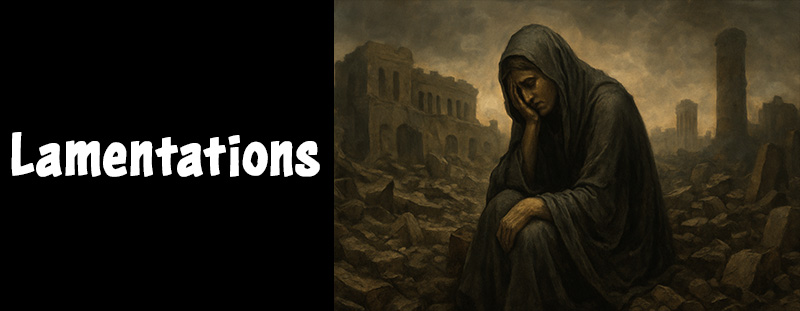
⚖️ God’s Wrath Poured Out on Zion ⚖️
“The Lord hath swallowed up all the habitations of Jacob, and hath not pitied: he hath thrown down in his wrath the strong holds of the daughter of Judah; he hath brought them down to the ground: he hath polluted the kingdom and the princes thereof.”
— Lamentations 2:2 (KJV)
Lamentations chapter 2 intensifies the sorrow introduced in the opening chapter. Where chapter 1 focuses on Jerusalem’s grief and confession, chapter 2 reveals the source of the devastation: the active judgment of the LORD. The language is direct, unflinching, and deliberately unsettling. God is no longer described as distant. He is portrayed as the One who has acted decisively against Zion.
This chapter dismantles any illusion that Jerusalem’s fall was merely political or military. Every destroyed wall, every silenced priest, and every broken stronghold is attributed to the righteous anger of God. The Lord is depicted as an enemy—not because He has changed, but because His people persistently rejected His covenant.
Yet even here, Scripture does not portray God as cruel or arbitrary. His wrath is judicial, not impulsive. The prophets warned. The people ignored. Judgment followed. Lamentations 2 teaches that divine patience, when exhausted, gives way to divine justice.
This chapter is sobering, but it is necessary. It reminds the reader that God’s holiness is not negotiable, and repentance delayed eventually becomes repentance denied.
📜 Structure of Lamentations Chapter 2
Verses 1–5: The LORD as the Executor of Judgment
God Himself is described as tearing down Zion’s defenses. The imagery is shocking: the Lord bends His bow like an enemy. This language emphasizes that the destruction came from His hand, not outside His control.
Verses 6–9: Worship Silenced and Authority Removed
The sanctuary is destroyed, feasts are forgotten, and priests and prophets are rejected. Spiritual leadership collapses alongside the city. When worship is abandoned, judgment soon follows.
Verses 10–14: False Prophets Exposed
The elders sit in silence. Children faint in the streets. The prophets are condemned—not for speaking harshly, but for speaking falsely. They offered comfort without correction, peace without repentance.
Verses 15–17: God’s Word Fulfilled
Jerusalem becomes an object of astonishment and mockery. Importantly, the text states plainly that the LORD has done exactly what He promised. His word—whether blessing or judgment—never fails.
Verses 18–22: A Call to Cry Out
The chapter ends with an urgent plea to weep before the Lord day and night. Though wrath has fallen, prayer is still commanded. Judgment does not cancel the invitation to repentance.
💡 Key Themes
✨ The Reality of Divine Wrath
God’s anger is real, righteous, and purposeful. Ignoring it distorts biblical truth.
✨ The Danger of False Teaching
Prophets who avoid truth hasten destruction rather than prevent it.
✨ God’s Word Always Stands
Every judgment fulfilled here was previously warned.
👤 Key People
- The LORD – Holy Judge executing covenant justice
- Zion (Jerusalem) – The object of judgment due to prolonged rebellion
- False Prophets – Voices of deception that failed the people
🔥 Why This Chapter Matters
Lamentations 2 confronts modern readers with a truth often avoided: God’s love does not negate His holiness. Persistent rebellion invites real consequences. This chapter reminds us that grace rejected becomes judgment endured. Yet even in wrath, God still calls His people to pray, repent, and return.
“It is a fearful thing to fall into the hands of the living God.”
(Hebrews 10:31, KJV)
💭 Let’s Reflect
- Do you take God’s warnings as seriously as His promises?
- Are you listening for truth—or only comfort?
- What happens when worship is neglected over time?
❓Ready to Go Deeper?
👉 Start reading Lamentations chapter 3 – Hope remembered in suffering