
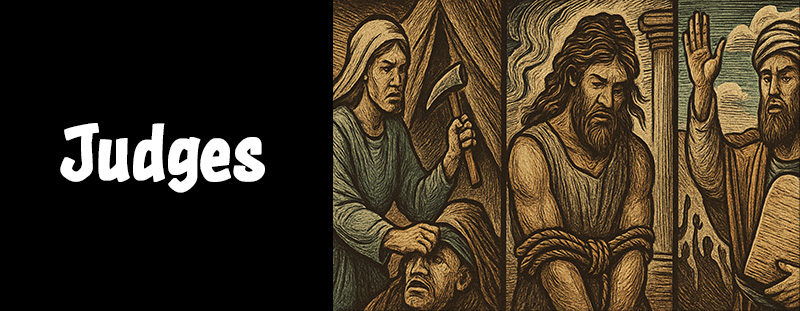
⚠️ Israel’s Spiritual and Moral Decline ⚠️
“And it came to pass, that when he was in Gibeah, that the men of the city compassed the house round, and beat on the door, and spake to the master of the house, the old man, saying, Bring forth the man that came into thine house, that we may know him.” – Judges 19:22 (KJV)
Judges chapter 19 presents one of the most tragic and sobering accounts in the Book of Judges, illustrating the depths of moral decay and spiritual corruption in Israel. This chapter reveals the consequences of lawlessness, selfishness, and the abandonment of God’s commands, showing a society in chaos when “every man did that which was right in his own eyes” (Judges 21:25). The narrative centers on a Levite and his concubine, whose mistreatment at the hands of the men of Gibeah leads to horrific events and sets the stage for civil conflict among the tribes of Israel.
The story demonstrates that spiritual neglect and disobedience bring violence and injustice. The Levite and his concubine travel through Judah and Benjamin, encountering danger that reflects the broader moral decay of Israel. This chapter underscores the need for justice, adherence to God’s law, and the consequences when His people turn away from righteousness.
📜 Structure of Judges Chapter 19
Verses 1–10: The Levite and His Concubine
A Levite takes a concubine from Bethlehem in Judah. After she leaves him, he pursues her and eventually reconciles with her, demonstrating personal relationships strained by selfishness, impatience, and miscommunication.
This section highlights the consequences of fractured relationships and moral laxity. The Levite’s decisions, though understandable, set the stage for further tragedy, illustrating how personal actions can escalate into broader societal consequences.
Verses 11–15: Journey to Gibeah
The Levite and his concubine travel to Gibeah in the tribe of Benjamin, seeking lodging. Initially, they are refused shelter, reflecting the moral corruption and hospitality breakdown in the city. Eventually, an old man offers them a place to stay, showing that pockets of goodness still exist amidst widespread depravity.
This emphasizes that even small acts of righteousness are valuable but insufficient to stop widespread sin when a culture has abandoned God.
Verses 16–30: The Rape and Death of the Concubine
Men of Gibeah surround the house, demanding to abuse the Levite. To protect himself, he gives his concubine, who is brutally violated throughout the night and dies. The Levite returns home, cuts her body into twelve pieces, and sends them throughout Israel to rally the tribes for justice.
This shocking event illustrates the depth of moral decay and the urgent need for justice and accountability. The act of dismemberment serves as a call to action, demonstrating that sin left unchecked leads to chaos, grief, and civil strife.
💡 Key Themes
✨ Moral Decay and Lawlessness
The chapter portrays a society where evil actions are rampant, showing the consequences when people abandon God’s law.
✨ The Importance of Justice
The Levite’s extreme response highlights Israel’s need for accountability and the restoration of justice to prevent further corruption.
✨ Spiritual Consequences of Disobedience
Israel’s moral collapse illustrates that turning from God’s commands leads to societal chaos and tragedy.
👤 Key People
- The Levite – His concubine’s death and his response catalyze the story, reflecting moral responsibility and human weakness.
- The Concubine – Victim of horrific abuse, her death symbolizes the consequences of lawlessness in Israel.
- The Old Man of Gibeah – Demonstrates kindness amidst widespread depravity.
- The Men of Gibeah – Represent the moral corruption and violence prevalent in Israel.
🔥 Why This Chapter Matters
Judges 19 serves as a warning of moral collapse when God’s law is ignored. It highlights the consequences of sin, abuse, and social injustice. This chapter also shows the urgency of righteous leadership and accountability in preserving societal and spiritual order. It reminds believers that God’s commands are meant to protect, guide, and sustain communities.
💭 Let’s Reflect
- How does lawlessness and moral compromise affect communities today?
- What can be learned from the Levite’s response to injustice and tragedy?
- How can believers uphold God’s standards in society to prevent spiritual and moral decline?
❓ Ready to Go Deeper?
👉 Judges chapter 20 – Israel confronts the tribe of Benjamin over the atrocity at Gibeah
Or, if you’d like to jump to a specific chapter in Judges, simply click the chapter number below:
1 | 2 | 3 | 4 | 5 | 6 | 7 | 8 | 9 | 10 | 11 | 12 | 13 | 14 | 15 | 16 | 17 | 18 | 19 | 20 | 21