
🩸 The Blood That Marked Salvation 🩸
“For I will pass through the land of Egypt this night, and will smite all the firstborn in the land of Egypt… and when I see the blood, I will pass over you, and the plague shall not be upon you to destroy you.” – Exodus 12:12–13 (KJV)
Exodus 12 is one of the most defining chapters in the entire Bible. It introduces the Passover, God’s appointed sign of deliverance for His people, and marks the turning point from slavery to freedom. In a night filled with judgment and mercy, the Israelites are redeemed through the blood of the lamb — a moment that foreshadows Christ’s sacrifice centuries later.
This chapter weaves together faith, obedience, and divine power, showing how the God of Israel keeps His promises even in the darkest hour. It is both historical and deeply symbolic — a story of rescue and the beginning of a new covenant identity for God’s people.
📜 Structure of Exodus Chapter 12
Verses 1–14: The Institution of the Passover
God speaks to Moses and Aaron in Egypt, declaring that this month — Abib (later called Nisan) — will mark the beginning of a new calendar for Israel. Every household is commanded to select an unblemished lamb on the tenth day and keep it until the fourteenth.
That night, the lamb is to be slain, and its blood placed on the doorposts and lintel of each house. The people are to eat the roasted lamb with unleavened bread and bitter herbs, symbolic of haste and hardship.
This meal, eaten in readiness with belts fastened and staffs in hand, becomes an everlasting memorial: “This day shall be unto you for a memorial; and ye shall keep it a feast to the LORD throughout your generations.”
The Passover is both a meal and a message — the blood signifies protection, and the lamb represents substitution. God’s judgment “passes over” those under the blood.
Verses 15–20: The Feast of Unleavened Bread
Following the Passover, God establishes the Feast of Unleavened Bread — a seven-day celebration where leaven (yeast) must be completely removed from every home. Leaven often symbolizes sin or corruption; its removal represents purity and separation.
This feast reminds Israel that freedom requires both deliverance from bondage and dedication to holiness. The people are to commemorate this yearly, passing the story down through generations.
Verses 21–28: Moses’ Instructions to Israel
Moses gathers the elders and relays God’s command. Each household is to apply the lamb’s blood using a bundle of hyssop, a humble plant later used in temple cleansing rituals. The blood becomes the sign of salvation, marking those who trust in God’s word.
When the people hear these instructions, they bow their heads and worship. Then they obey — a model of faith expressed through action.
Their obedience transforms the night of terror into a testimony of faith. The destroyer passes over every home covered by the blood.
Verses 29–36: The Death of the Firstborn and Pharaoh’s Surrender
At midnight, God strikes down all the firstborn in Egypt — from Pharaoh’s palace to the prisoner’s cell. Egypt awakens to wailing and grief beyond measure. Pharaoh finally yields, calling Moses and Aaron and saying, “Rise up, and get you forth from among my people.”
The Israelites depart hastily, carrying their unleavened dough. Their Egyptian neighbors, terrified and desperate, urge them to leave and even give them silver, gold, and garments — fulfillment of God’s promise that they would not leave empty-handed.
Verses 37–42: The Exodus Begins
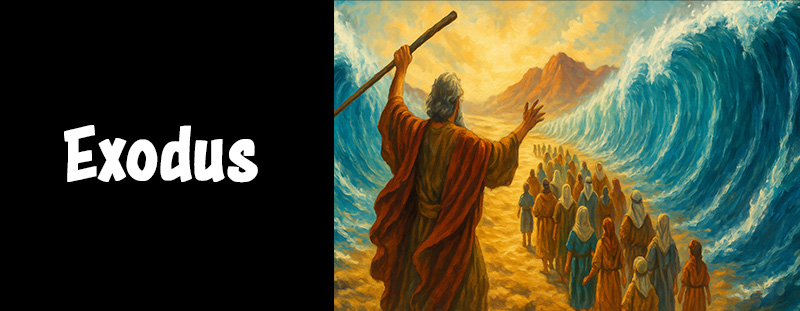
After 430 years in Egypt, the Israelites march out — six hundred thousand men on foot, besides women and children.A mixed multitude joins them, showing that God’s salvation was not limited to bloodline but open to all who trusted Him.
This night becomes known as “a night to be much observed unto the LORD” — a celebration of deliverance that future generations will recall as the foundation of their faith.
Verses 43–51: The Regulations for the Passover
God gives specific instructions for future Passover observances. Only those circumcised and within the covenant may partake, signifying purity and belonging. The meal is to be eaten in one house, with none of its bones broken — a prophetic detail echoed in the crucifixion of Christ (John 19:36).
The chapter closes with perfect obedience: “Thus did all the children of Israel; as the LORD commanded Moses and Aaron, so did they.”
💡 Key Themes
✨ Redemption Through Substitution
The lamb dies in place of the firstborn — a divine exchange. This central theme points forward to Jesus Christ, the Lamb of God, whose blood brings eternal deliverance.
✨Obedience in Faith
Israel’s salvation hinged on obedience to God’s instruction. Faith without action would have left them unprotected. The same truth echoes throughout Scripture — belief must be lived, not merely spoken.
✨The Power of Covenant Identity
Exodus 12 establishes Israel not just as a freed people but as God’s covenant nation. The Passover meal becomes a defining mark of belonging, reminding them that freedom comes from God alone.
✨ Judgment and Mercy
In one night, God’s justice and mercy are revealed side by side. The same power that brings death to Egypt brings life to Israel. The difference lies in the blood — a profound truth that still speaks to redemption today.
👤 Key People
- Moses – God’s chosen leader who communicates divine instruction and guides Israel through obedience.
- Aaron – The spokesman who helps deliver God’s commands and strengthens the people’s faith.
- Pharaoh – The defiant ruler whose pride leads to devastating loss.
- The Israelites – God’s chosen nation, redeemed and called into covenant relationship.
- The Mixed Multitude – Non-Israelites who joined the Exodus, symbolizing the inclusiveness of God’s salvation.
🔥 Why This Chapter Matters
Exodus 12 is the moment where redemption becomes reality. The blood on the doorposts wasn’t mere ritual — it was a prophetic act pointing to the Gospel itself. The same God who delivered Israel through the lamb’s blood delivers humanity through the Lamb of God.
This chapter calls us to remember that salvation is not earned but received, and that true freedom begins with trust in God’s promise and obedience to His word.
💭 Let’s Reflect
- What does the Passover teach about the relationship between faith, obedience, and deliverance?
- How does the blood of the lamb foreshadow Jesus’ sacrifice on the cross?
- In what ways can you “remember” your deliverance from sin and live as one set apart for God?
❓Ready to Go Deeper?
👉 Click here to begin reading Exodus Chapter 13
Or, if you’d like to jump to a specific chapter in Exodus, simply click the chapter number below:
1 | 2 | 3 | 4 | 5 | 6 | 7 | 8 | 9 | 10 | 11 | 12 | 13 | 14 | 15 | 16 | 17 | 18 | 19 | 20 | 21 | 22 | 23 | 24 | 25 | 26 | 27 | 28 | 29 | 30 | 31 | 32 | 33 | 34 | 35 | 36 | 37 | 38 | 39 | 40