
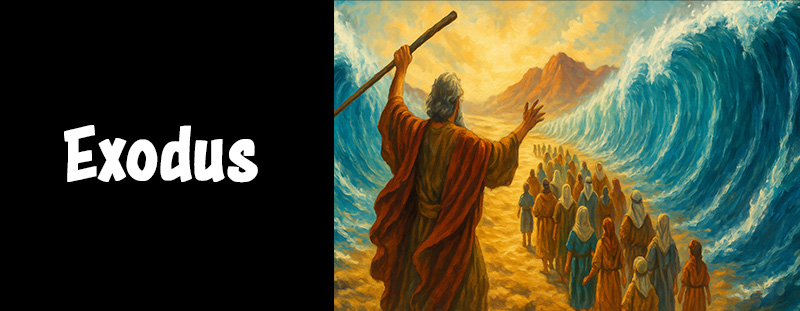
🌑 The Lord’s Power Over Egypt and the Hardness of Pharaoh’s Heart 🌑
“And the LORD said unto Moses, Go in unto Pharaoh: for I have hardened his heart, and the heart of his servants, that I might show these my signs before him.” – Exodus 10:1
Exodus 10 continues the dramatic confrontation between God and Pharaoh. The Lord sends two devastating plagues—locusts and darkness—that reveal His absolute authority over nature and human power. Despite Egypt’s ruin, Pharaoh’s pride remains unbroken, setting the stage for the final judgment. This chapter illustrates the cost of hardened hearts and the triumph of God’s sovereignty over all earthly kings.
📜 Structure of Exodus Chapter 10
Verses 1–2: God’s Purpose Revealed
God tells Moses that Pharaoh’s hardened heart serves a divine purpose—to display His mighty works and to ensure that future generations of Israel will remember His power. This is not merely judgment; it’s testimony. The signs against Egypt are lessons in faith and remembrance.
Verses 3–6: Moses’ Plea and Pharaoh’s Stubbornness
Moses and Aaron confront Pharaoh again, warning him of the coming locusts if he refuses to humble himself. Pharaoh’s counselors plead with him to release the Israelites, recognizing Egypt’s ruin, but Pharaoh’s pride blinds him. His hesitation between partial obedience and rebellion demonstrates how pride distorts reason.
Verses 7–15: The Plague of Locusts
Pharaoh briefly offers to let only the men go, but Moses insists the whole nation must worship God. When Pharaoh refuses, God sends an east wind carrying locusts that consume every green thing left after the previous plagues. Egypt is devastated—its crops, trees, and fields stripped bare. The locusts symbolize total desolation and divine judgment on Egypt’s fertility gods.
Verses 16–20: Pharaoh’s False Repentance
Pharaoh hurriedly calls Moses and Aaron, admitting his sin and begging for relief. Moses prays, and God removes the locusts with a west wind that casts them into the Red Sea. Yet Pharaoh hardens his heart again. His repentance is shallow—a sorrow for consequences, not for rebellion.
Verses 21–23: The Plague of Darkness
God commands Moses to stretch out his hand, and an oppressive darkness covers Egypt for three days. It is a darkness so deep it can be “felt.” Yet in the homes of the Israelites, there is light. This powerful image contrasts spiritual blindness with divine illumination—Egypt gropes in fear while God’s people rest in His light.
Verses 24–29: Pharaoh’s Final Refusal
Pharaoh offers to let the people go but demands that their flocks and herds stay behind. Moses refuses, insisting that all must go to serve the Lord. Enraged, Pharaoh orders Moses to leave and never return, threatening death if he does. Moses solemnly declares that Pharaoh’s word will stand—their final meeting has come.
💡 Key Themes
✨ The Consequences of Pride
Pharaoh’s pride blinds him to reason and mercy. His repeated hardening shows how arrogance isolates the heart from truth and light. Each plague is an opportunity for repentance, yet Pharaoh’s heart becomes darker.
✨ Divine Sovereignty
God’s control over nature—the winds, insects, and light itself—demonstrates His unmatched authority. He not only judges Egypt but teaches His people that He alone rules heaven and earth.
✨ Spiritual Light and Darkness
The ninth plague offers more than a physical phenomenon. It symbolizes the spiritual divide between those who walk in God’s light and those who reject Him. Egypt’s darkness is both literal and moral.
✨ Partial Obedience Is Disobedience
Pharaoh’s offers of compromise—letting only men go or keeping the livestock—mirror the human tendency to negotiate with God’s commands. True obedience requires full surrender.
👤 Key People
- Moses – God’s chosen leader, whose faith and obedience stand firm in the face of Pharaoh’s rage.
- Pharaoh – The hardened ruler of Egypt, whose pride resists God’s will until destruction looms.
- Aaron – Moses’ spokesman, faithfully delivering God’s commands.
- The Egyptians – Witnesses to God’s power, suffering under judgment yet still under Pharaoh’s rule.
🔥 Why This Chapter Matters
Exodus 10 reminds readers that God’s power is both just and purposeful. Every act of judgment is also a revelation of divine glory. The chapter invites reflection on the dangers of resisting God’s truth and the beauty of walking in His light. When human power collides with divine will, only one stands eternal.
💭 Let’s Reflect
- Have you ever seen how pride can blind you or others from truth or change?
- What does the plague of darkness teach you about spiritual blindness and divine light?
- How can you move from partial obedience to wholehearted trust in God’s direction?
❓Ready to Go Deeper?
👉 Click here to begin reading Exodus Chapter 11
Or, if you’d like to jump to a specific chapter in Exodus, simply click the chapter number below:
1 | 2 | 3 | 4 | 5 | 6 | 7 | 8 | 9 | 10 | 11 | 12 | 13 | 14 | 15 | 16 | 17 | 18 | 19 | 20 | 21 | 22 | 23 | 24 | 25 | 26 | 27 | 28 | 29 | 30 | 31 | 32 | 33 | 34 | 35 | 36 | 37 | 38 | 39 | 40