
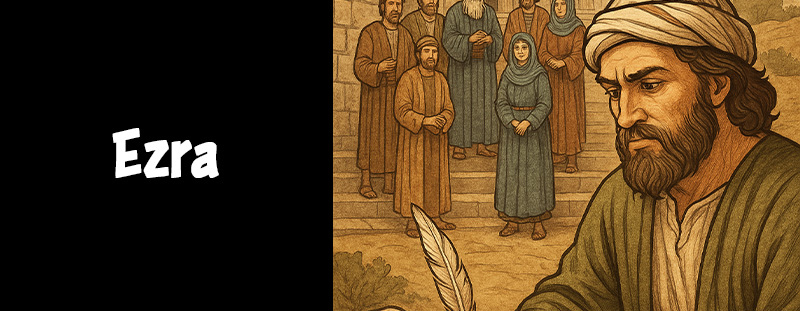
🔥 Restoring the Heart of Worship in Jerusalem 🔥
“Then stood up Jeshua the son of Jozadak, and his brethren the priests, and Zerubbabel the son of Shealtiel, and his brethren, and builded the altar of the God of Israel, to offer burnt offerings thereon, as it is written in the law of Moses the man of God.” – Ezra 3:2
Ezra Chapter 3 focuses on the first steps of spiritual and physical restoration after the exiles return to Jerusalem. The chapter highlights the rebuilding of the altar of the LORD and the reinstitution of worship, marking a pivotal moment in the revival of God’s covenant community. Rebuilding the altar is not just a construction project—it symbolizes the restoration of faith, obedience, and devotion to God after years of exile.
The chapter also emphasizes the leadership of Jeshua the priest and Zerubbabel the governor, showing that God’s work requires both spiritual and practical guidance. The people gather together, offer sacrifices, and celebrate the Feast of Tabernacles according to the law, demonstrating a commitment to reestablish God’s worship in the land. The laying of the temple foundation inspires both joy and sorrow, as older generations remember Solomon’s temple while younger ones look forward to a renewed house of God.
Ezra 3 teaches that worship is the cornerstone of restoration. It shows that spiritual renewal must precede or accompany physical rebuilding, and that God honors those who serve faithfully, both in devotion and in action.
📜 Structure of Ezra Chapter 3
Verses 1–6: Rebuilding the Altar
Jeshua the priest and Zerubbabel the governor lead the people in rebuilding the altar of God in Jerusalem. Sacrifices are resumed in accordance with the Law of Moses. This act demonstrates obedience, faithfulness, and the priority of worship in God’s restoration plan.
Verses 7–13: Rebuilding the Temple Foundation
Once the altar is rebuilt, the people begin laying the foundation of the temple. Contributions of money, gold, silver, and materials from willing donors enable the construction to move forward. Joy and weeping mix as the older generation, who remember Solomon’s temple, witness the new beginnings, while the younger generation, who only know exile, rejoice. This dual reaction reflects both hope and reverence for God’s enduring promises.
💡 Key Themes
✨ The Centrality of Worship
Rebuilding the altar emphasizes that restoration begins with devotion to God and proper worship.
✨ Leadership and Collaboration
Spiritual and civic leaders guide the community, showing the importance of joint efforts in God’s work.
✨ Faithful Remembrance and Renewal
The people honor their history while participating in the new work, highlighting continuity and hope in God’s plan.
👤 Key People
- Jeshua – Priest leading the restoration of sacrifices and worship.
- Zerubbabel – Governor providing guidance and coordination for rebuilding efforts.
- Returning Exiles – Participate actively in worship and the rebuilding of God’s house.
🔥 Why This Chapter Matters
Ezra 3 teaches that true restoration involves both spiritual devotion and practical action. By prioritizing worship, the people align themselves with God’s will, laying a foundation for future blessings and the completion of the temple. It’s a reminder that God honors faithfulness, obedience, and community participation in His work.
💭 Let’s Reflect
- How can you prioritize worship and devotion in your personal life alongside daily responsibilities?
- In what ways can leaders in your community guide both spiritual and practical restoration efforts?
- How do you honor the past while actively participating in God’s work today?
❓Ready to Go Deeper?
👉 Start reading Ezra chapter 4 – Opposition arises against the rebuilding of the temple.