
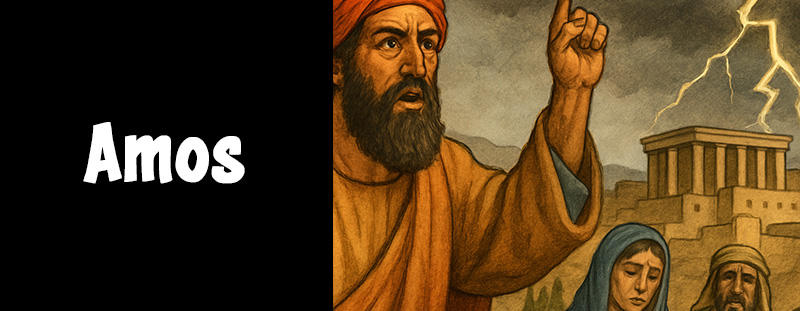
⚖️ Righteous Wrath Against Judah and Israel ⚖️
“But I will send a fire upon Judah, and it shall devour the palaces of Jerusalem.” – Amos 2:5
Amos chapter 2 continues the prophet’s message of divine judgment, now turning directly to God’s chosen people: Judah and Israel. While chapter 1 targeted the surrounding nations for cruelty and injustice, chapter 2 reveals that God’s covenant with His people does not shield them from accountability. Amos delivers a sobering message: privileges come with responsibilities, and failure to uphold righteousness invites God’s correction.
This chapter emphasizes that sin among God’s people carries a greater weight. Judah and Israel have not only committed acts of violence and oppression but have also turned away from God’s law, engaging in idolatry, greed, and moral corruption. Their social injustices—oppressing the poor, abusing the vulnerable, and profaning sacred spaces—provoke God’s righteous anger. The chapter underscores that God’s justice is impartial: favoritism or heritage cannot excuse wrongdoing.
📜 Structure of Amos Chapter 2
Verses 1–3: Judgment on Moab
Amos begins with Moab, condemned for burning the bones of the king of Edom to lime. God’s judgment is fierce, illustrating that defilement of life and disrespect for humanity cannot escape punishment. The oracles set a tone that God’s justice is precise and unrelenting.
Verses 4–5: Judgment on Judah
Judah is called out for rejecting God’s law and for violence against the vulnerable. Amos warns that despite being God’s people, their sin will provoke His wrath, including a fire that will destroy Jerusalem’s palaces. This demonstrates that spiritual privilege does not exempt any nation or individual from accountability.
Verses 6–8: Judgment on Israel
Israel faces the heaviest condemnation for its greed, exploitation of the poor, and social injustice. The people sold the righteous for silver and the needy for a pair of shoes, showing total disregard for God’s commandments. Their corruption in courtrooms and exploitation of the defenseless reveal a society entirely turned from God.
Verses 9–12: God’s Past Deliverances Ignored
Amos reminds Israel of God’s faithfulness in the past: He brought them from Egypt and guided them through the wilderness. Yet they rejected His law, highlighting human ingratitude. This reinforces the pattern that God’s blessings require obedience, and unfaithfulness leads to judgment.
Verses 13–16: The Coming Punishment
The chapter concludes with vivid imagery of destruction: the high places, palaces, and fortresses will be destroyed, and the people will face terror and exile. God’s justice is both inevitable and exact, demonstrating that His moral order will not be undermined.
💡 Key Themes
✨ Sin Among God’s People is Especially Serious
Privileged status or heritage does not protect anyone from divine judgment.
✨ Social Injustice Provokes God’s Wrath
Exploitation of the poor, abuse of the innocent, and corruption in leadership invite correction.
✨ God Remembers His Faithfulness
Despite Israel’s rebellion, God’s covenant history highlights His patience, but persistence in sin has limits.
👤 Key People
- Amos – Prophet delivering God’s warnings.
- Judah and Israel – God’s covenant people facing judgment.
- Moab – Neighboring nation previously condemned.
- God – The righteous judge, enforcing justice and moral law.
🔥 Why This Chapter Matters
Amos 2 is a sobering reminder that privilege carries responsibility. God’s people are held accountable for moral and social corruption. The chapter calls believers to self-examination and action, especially in protecting the poor, upholding justice, and maintaining faithfulness to God’s commands.
💭 Let’s Reflect
- Are there areas in your life where privilege or comfort may blind you to injustice?
- How can you actively uphold God’s justice in your community?
- What lessons can be learned from Israel’s failure to honor God despite His past deliverances?
❓Ready to Go Deeper?
👉 Start reading Amos chapter 3 – God explains the reasons for Israel’s judgment.