
⛪ Honor, Authority, and Reverence in God’s House ⛪
“For as often as ye eat this bread, and drink this cup, ye do shew the Lord’s death till he come.” – 1 Corinthians 11:26 (KJV)
In 1 Corinthians chapter 11, the apostle Paul the Apostle addresses order within public worship. The chapter confronts two major issues: headship and conduct in corporate gatherings, and abuses surrounding the Lord’s Supper.
This chapter is not merely about cultural customs. It is about divine order, spiritual authority, and reverence in worship. Corinthian believers were gifted yet disorderly. Therefore, Paul corrects behavior that distorted both testimony and theology.
Worship reflects what we believe about God. When worship becomes self-centered, chaotic, or irreverent, it misrepresents Christ. Paul’s instruction restores structure grounded in creation, redemption, and covenant remembrance.
The overarching theme is simple yet weighty: God cares how His people gather.
📜 Structure of 1 Corinthians Chapter 11
Verses 1–16: Headship and Honor in Worship
Paul begins with a call to imitation—“Be ye followers of me, even as I also am of Christ.” Authority in the church mirrors Christ’s submission to the Father.
He outlines a structure of headship:
- The head of every man is Christ.
- The head of the woman is the man.
- The head of Christ is God.
This order reflects function, not inferiority. It establishes accountability and spiritual covering.
In Corinth, cultural symbols such as head coverings signified honor or dishonor within that framework. Paul argues that outward conduct in worship should visibly respect divine order. Creation itself—man formed first, woman created from man—reinforces this pattern.
The deeper principle transcends culture: worship must align with God’s design, not societal rebellion.
Verses 17–22: Disorder at the Lord’s Table
Paul shifts from commendation to rebuke. When the Corinthians gathered, it was not for the better but for the worse.
Divisions marked their assemblies. Wealthier believers ate abundantly while poorer members went hungry. What was intended as sacred remembrance had become social inequality.
Paul’s words are sharp: “What? have ye not houses to eat and to drink in?” The Lord’s Supper is not common consumption. It is covenant proclamation.
Self-centered behavior profanes sacred observance.
Verses 23–26: Institution of the Lord’s Supper
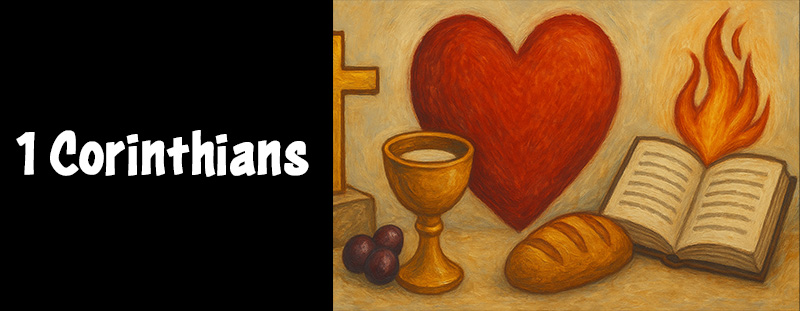
Paul recounts what he received from the Lord. On the night He was betrayed, Jesus Christ took bread, gave thanks, and broke it. The bread represents His body. The cup represents the new covenant in His blood.
This ordinance is proclamation. Each observance declares Christ’s death until His return.
The Lord’s Supper is theological. It anchors believers in substitutionary sacrifice and future hope.
Verses 27–32: Self-Examination and Judgment
Participation requires discernment. To eat and drink unworthily is to be guilty concerning the body and blood of the Lord.
Paul commands self-examination. This is not sinless perfection but sober reflection. Failure to discern the Lord’s body had resulted in weakness, sickness, and even death among some Corinthians.
Divine discipline, however, is corrective—not condemnatory. God chastens so believers are not condemned with the world.
Reverence protects blessing.
Verses 33–34: Order Restored
Paul concludes practically. Wait for one another. Eat at home if hunger is the primary concern.
Worship gatherings must prioritize unity, remembrance, and reverence.
Order safeguards holiness.
💡 Key Themes
✨ Divine Order in Worship
God establishes structure for authority and accountability within the church.
✨ Reverence at the Lord’s Table
Communion is sacred proclamation, not casual ritual.
✨ Self-Examination
Spiritual reflection prevents discipline and fosters maturity.
👤 Key People
- Paul the Apostle – The apostolic voice correcting disorder.
- The Corinthian Believers – A divided congregation needing reverence and unity.
- Jesus Christ – The crucified and risen Lord remembered in communion.
🔥 Why This Chapter Matters
1 Corinthians 11 confronts casual Christianity. Modern worship can drift toward performance or preference. This chapter restores gravity.
Authority is not oppressive when rightly understood—it reflects divine design. Communion is not symbolic nostalgia—it is covenant proclamation.
The local church must guard unity, reverence, and doctrinal clarity. Worship is not about personal expression alone. It is about honoring God’s holiness.
When believers gather, heaven observes.
💭 Let’s Reflect
- Do you approach worship with reverence and humility?
- Is there unresolved division affecting your fellowship?
- How seriously do you treat the Lord’s Supper?
❓ Ready to Go Deeper?
👉 Start reading 1 Corinthians chapter 12 – Spiritual gifts and unity.
Or, if you’d like to jump to a specific chapter in 1 Corinthians, simply click the chapter number below:
1 | 2 | 3 | 4 | 5 | 6 | 7 | 8 | 9 | 10 | 11 | 12 | 13 | 14 | 15 | 16