
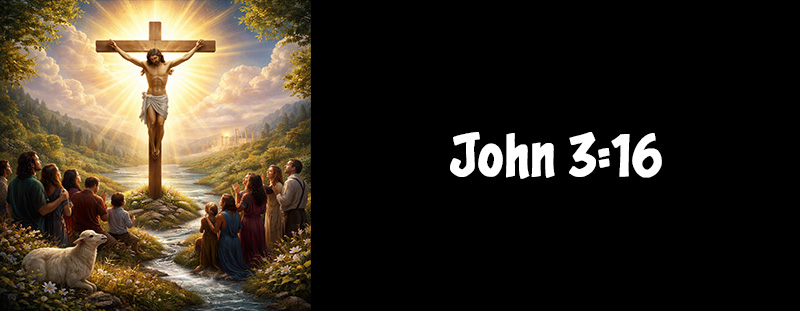
“For God so loved the world, that he gave his only begotten Son, that whosoever believeth in him should not perish, but have everlasting life.” (John 3:16 KJV)
John 3:16 is often called the heart of the Gospel because it clearly explains God’s love, Christ’s sacrifice, and the promise of eternal life. In one verse, we see the reason for salvation and the way it is received. This is not poetic exaggeration. It is a direct declaration of how a person is reconciled to God.
The verse begins with God’s motive. It does not start with human effort or religious performance. Instead, it begins with divine love. From there, it moves to action. God gave His Son. Finally, it presents a promise. Whoever believes in Him receives everlasting life. Therefore, John 3:16 is not simply inspirational. It is foundational doctrine that shapes the Christian faith.
👉 Learn more from John chapter 3 about the new birth and the promise of salvation through Christ.
🔥 What Does John 3:16 Mean for Us Today?
To understand the meaning of John 3:16, we must examine each part carefully and in context. This verse was spoken by Jesus during His conversation with Nicodemus, where He explained the necessity of being born again. The statement summarizes the entire message of redemption.
When Scripture says, “For God so loved the world,” it reveals the scope of God’s love. The term “world” refers to humanity in its fallen condition. Romans 5:8 reinforces this truth: “But God commendeth his love toward us, in that, while we were yet sinners, Christ died for us.” God did not wait for righteousness. He acted while humanity was still in sin. Therefore, salvation originates in grace, not human merit.
The phrase “that he gave his only begotten Son” reveals the cost of redemption. The giving was not symbolic. It involved incarnation, suffering, crucifixion, and death. Isaiah 53:5 explains, “But he was wounded for our transgressions, he was bruised for our iniquities.” Christ bore the penalty that justice required. This was substitution. He took what we deserved so that we might receive what He offers.
Finally, the promise appears: “that whosoever believeth in him should not perish, but have everlasting life.” The word “whosoever” makes the invitation universal. However, the condition remains clear—belief. Faith is not mere acknowledgment. It is trust and reliance upon Christ alone for salvation. Acts 4:12 confirms, “Neither is there salvation in any other.” Eternal life is found exclusively in Jesus Christ.
🛠 Real Life Stories That People Can Relate To
Consider someone carrying guilt from past mistakes. They believe they must fix themselves before coming John 3:16 speaks directly into everyday struggles. Many people carry guilt from past failures and assume they must fix themselves before approaching God. This verse corrects that misunderstanding. God initiated salvation while humanity was still broken. Therefore, forgiveness is not earned through self-improvement. It is received through faith.
In addition, this verse addresses fear about eternity. Questions about death and judgment often linger beneath the surface of daily life. However, Jesus gives assurance. Those who believe “have everlasting life.” That promise replaces uncertainty with confidence. It shifts the focus from fear of condemnation to hope in redemption.
Because of this truth, believers can live with stability. Their identity is rooted in Christ’s finished work, not personal performance. Their future is secured by God’s promise, not fragile circumstances. That changes how a person faces hardship, failure, and even death itself.
📝 Lessons
- John 3:16 teaches that God’s love is active and sacrificial. It is not abstract compassion. It moves toward sinners with purpose and cost. The cross demonstrates that love in visible form.
- The verse also teaches that salvation is a gift. A gift cannot be earned without ceasing to be a gift. Ephesians 2:8–9 makes this principle clear. Faith receives what grace provides.
- Finally, this passage teaches the certainty of eternal life. Everlasting life is not temporary relief or probationary status. It is a secured promise grounded in God’s character. When God declares life, that life is eternal.
💭 Reflections
Take a moment to examine your foundation. Are you relying on moral effort or religious routine for assurance? Or have you personally trusted Jesus Christ for salvation? John 3:16 draws a clear distinction between belief and unbelief. It does not allow for neutrality.
Consider whether you truly rest in God’s love. Do you believe that Christ’s sacrifice was sufficient for your sin? Scripture presents a decisive invitation. The promise stands, but it must be received by faith. Reflect honestly, because eternal matters require clarity.
🤠 The Big Takeaway
John 3:16 compresses the entire Gospel into one statement of truth. It reveals God’s motive, Christ’s mission, and humanity’s response. God loved. God gave. Whoever believes receives everlasting life. That sequence defines Christian salvation.
This verse remains steady when culture shifts and circumstances change. It offers assurance in uncertainty and hope in the face of death. When doubt arises, return to this promise. When fear presses in, stand on this truth. God’s love initiated redemption, and faith in Jesus Christ secures eternal life forever. ✝️🔥
📚 Further Reading
Visit our Scripture Section for more Bible-based reflections.
🔗 Explore Parables of Jesus from the Gospels
🔗 Learn about mercy in our Bible Verses section
🔗 Read the Word of God the Christian Cowboy way
🔗 Meet the heroes of faith in our Cloud of Witnesses
🔗 Study God’s moral law in the Ten Commandments section
🔗 Stand firm in spiritual battles with our Armor of God teaching