
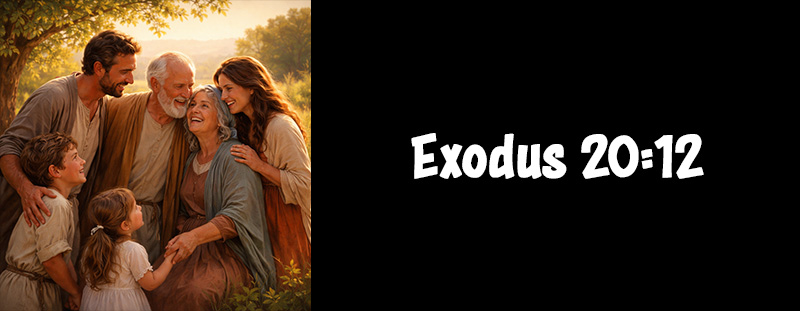
“Honour thy father and thy mother: that thy days may be long upon the land which the Lord thy God giveth thee.” (Exodus 20:12)
Exodus 20:12 stands as one of the most foundational commands in Scripture. It is part of the Ten Commandments, yet it carries something unique—a promise. The primary keyphrase, Exodus 20:12 honoring parents, reminds us that obedience inside the home shapes blessing outside the home.
This verse is not merely about childhood behavior. It speaks to lifelong respect, gratitude, and humility. In a culture that celebrates self-rule and personal autonomy, God calls His people to something higher—honor.
Honor requires discipline. It demands maturity. However, it also unlocks stability and longevity. God ties respect for parental authority directly to “long days upon the land.” That is covenant language. That is blessing language.
When families fracture, society weakens. Therefore, this command protects more than households—it safeguards communities.
👉 Learn more from Exodus chapter 20 about God’s covenant teaching in our daily lives.
🔥 What Does Exodus 20:12 Mean for Us Today?
Exodus 20:12 teaches that authority in the home mirrors authority under God. When we learn to honor parents, we learn to submit to the Lord.
Here are three key truths:
• Honor reflects obedience to God: Respecting parents is an act of worship, not just courtesy.
• Honor builds generational strength: Families rooted in respect pass down stability.
• Honor carries promise: God attaches longevity and blessing to this command.
However, honor does not mean ignoring hurt or pretending dysfunction never existed. It means choosing respect in posture and speech, even while maintaining wisdom and boundaries when necessary.
In addition, this command calls adults as well as children. Even after parents age, honoring them remains a testimony of faith.
🛠 Real Life Stories That People Can Relate To
Consider someone caring for an aging parent. It is inconvenient. It stretches patience. Yet in choosing to serve rather than resent, that person reflects Exodus 20:12 in action.
Or think about a young adult who disagrees with their parents’ decisions. Instead of responding with sarcasm or rebellion, they respond with calm respect. That discipline builds character.
These everyday moments test whether honor is theoretical or lived.
📝 Lessons
- Scripture Is Practical: God’s commands apply directly to family dynamics.
- Honor Is Strength: Respect requires maturity, not weakness.
- Blessing Follows Obedience: God’s promises are connected to faithful action.
💭 Reflections
Where has pride replaced honor in your life? Are there words spoken in frustration that need correction?
Exodus 20:12 challenges the heart. It asks whether we value God’s design more than personal emotion. Reflect honestly. Restoration often begins with humility.
Ask yourself: Am I modeling honor in my home, workplace, and church?
🤠 The Big Takeaway
Exodus 20:12 is more than an ancient command. It is a blueprint for generational blessing. When believers practice honor, they create stability that outlives them.
God designed the family as a training ground for faith. Therefore, respect inside the home prepares us for obedience in every other area.
Walk in honor. Choose humility. Trust the promise.
📚 Further Reading
Visit our Scripture Section for more Bible-based reflections.
🔗 Explore Parables of Jesus from the Gospels
🔗 Learn about mercy in our Bible Verses section
🔗 Read the Word of God the Christian Cowboy way
🔗 Meet the heroes of faith in our Cloud of Witnesses
🔗 Study God’s moral law in the Ten Commandments section
🔗 Stand firm in spiritual battles with our Armor of God teaching